strategy to revitalize the asinara island
strategy to revitalize the asinara island
Research & Design
Threshold between sea & land, confinement & liberation


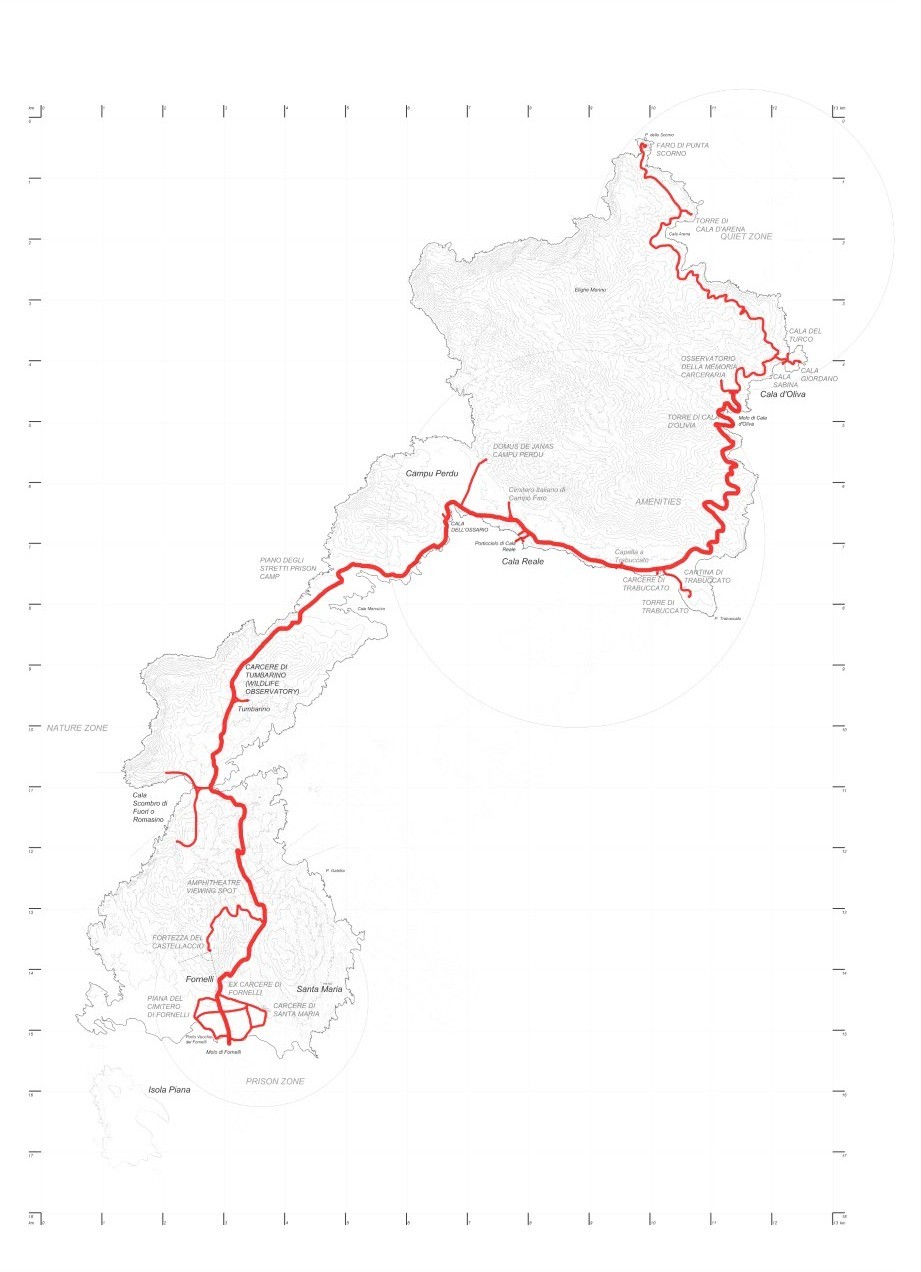
The project began by recognizing that while Asinara Island is now valued mainly for its natural landscape, its layered past as a quarantine site, prison, and settlement has left abandoned and fragile historical traces at risk of being forgotten. The project therefore seeks to reconnect marginalized areas
with the road network and existing facilities, creating a destination where landscape, history, and culture intertwine.
The masterplan was developed using a methodology inspired by the 5 elements of city imageability by Kevin Lynch, helping users understand and navigate the island through the themes of nature and history. New functions are introduced into abandoned structures to connect these two aspects into
one cohesive experience.
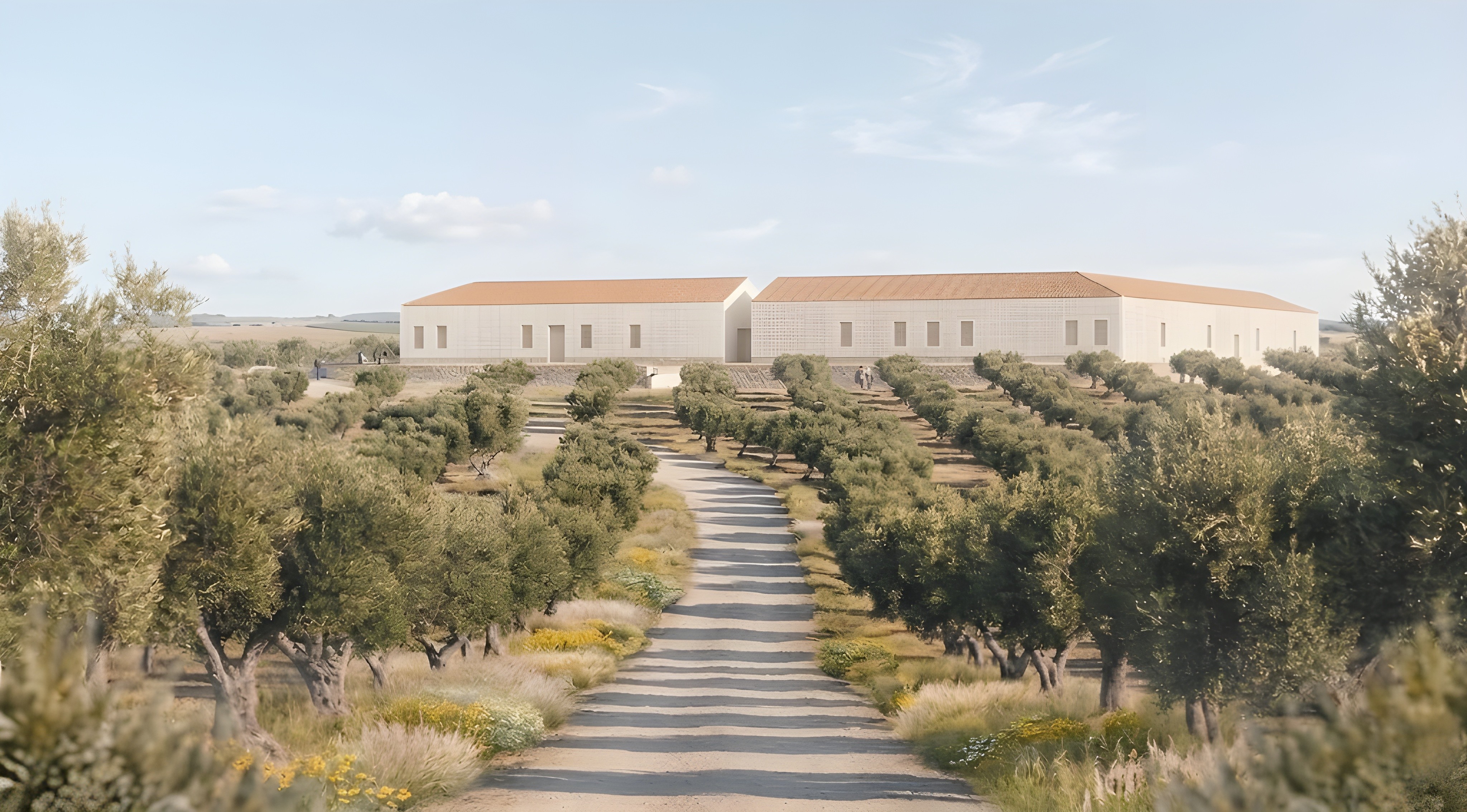
The site-specific proposal plan of the Fornelli area proposes a network of natural and human systems that evolve and regenerate the island. It begins with reintroducing agricultural activities such as olive and grape cultivation, historically practiced by prisoners, supported by the reactivation of the
nearby lake for irrigation.
The simple gesture of cutting the façade of Fornelli Prison transforms the middle wing into a semi-outdoor gallery that exhibits artifacts and the stories of the prison. This approach is inspired by Gordon Matta-Clark’s urban interventions, which illuminate the void by surgically “unbuilding” structures
to reveal their inner workings.
Location
Asinara Island, Sardegna, Italy
Project Year
2025
Collaboration w/
Alina Kashitsyna
María José García Morales
Tutor - Andreas Fries & Monica Gaspar Bonilla, (Herzog & de Meuron) & YAcademy
Location
Asinara Island, Sardegna, Italy
Project Year
2025
Collaboration w/
Alina Kashitsyna
María José García Morales
Tutor - Andreas Fries & Monica Gaspar Bonilla, (Herzog & de Meuron) & YAcademy



back to top
strategy to revitalize the asinara island
Research & Design
Threshold between sea & land, confinement & liberation
The project began by recognizing that while Asinara Island is now valued mainly for its natural landscape, its layered past as a quarantine site, prison, and settlement has left abandoned and fragile historical traces at risk of being forgotten. The project therefore seeks to reconnect marginalized areas
with the road network and existing facilities, creating a destination where landscape, history, and culture intertwine.
The masterplan was developed using a methodology inspired by the 5 elements of city imageability by Kevin Lynch, helping users understand and navigate the island through the themes of nature and history. New functions are introduced into abandoned structures to connect these two aspects into
one cohesive experience.
The site-specific proposal plan of the Fornelli area proposes a network of natural and human systems that evolve and regenerate the island. It begins with reintroducing agricultural activities such as olive and grape cultivation, historically practiced by prisoners, supported by the reactivation of the
nearby lake for irrigation.
The simple gesture of cutting the façade of Fornelli Prison transforms the middle wing into a semi-outdoor gallery that exhibits artifacts and the stories of the prison. This approach is inspired by Gordon Matta-Clark’s urban interventions, which illuminate the void by surgically “unbuilding” structures
to reveal their inner workings.
Location
Asinara Island, Sardegna, Italy
Project Year
2025
Collaboration w/
Alina Kashitsyna
María José García Morales
Tutor - Andreas Fries & Monica Gaspar Bonilla, (Herzog & de Meuron) & YAcademy
Location
Asinara Island, Sardegna, Italy
Project Year
2025
Collaboration w/
Alina Kashitsyna
María José García Morales
Tutor - Andreas Fries & Monica Gaspar Bonilla, (Herzog & de Meuron) & YAcademy
back to top